
Phu Quoc travel logistics: 2026 route planning
Phu Quoc covers about 574 km². Hotel location and how you arrive shape most itineraries more than any single attraction. Splitting nights between the north, Duong Dong and the An Thoi peninsula without a plan means long road days.
Direct international routes into Phu Quoc International Airport (PQC) expanded again in 2026 — a large share of foreign arrivals now land on the island without a mainland overnight. That changes visa and transfer math for independent travellers.
Visa rule: keep the itinerary on the island
Visitors who fly internationally into PQC, or who stay inside the international transit zones at Tan Son Nhat or Noi Bai, may use Vietnam’s 30-day Phu Quoc visa exemption. The condition is strict: the whole stay must remain on Phu Quoc.
Leave the transit corridor to collect bags on a split ticket and border control will treat the trip as a normal Vietnam entry — you need a tourist e-visa (or other valid visa) before that happens. Passports should have at least six months’ validity; officers may ask for an onward ticket inside the 30-day window. For mainland legs (Da Nang, Hoi An, HCMC city stay), arrange the e-visa before first entry.
Airport, buses and first transfer
PQC sits about 10 km south of Duong Dong. Registered Vinasun and Mai Linh taxis wait outside the terminal; Grab and Xanh SM work for island rides when the app is already set up. In busy banks, a pre-booked airport transfer avoids the curb queue.
VinBus electric routes link the terminal with northern and central resort nodes on a roughly 30-minute headway. They are useful with light bags in daylight. With heavy luggage or a late arrival, door-to-door is usually faster. Scooter rentals remain common at about 150,000–200,000 VND per day for a 125cc class bike — photograph the bike, wear a helmet, and check licence rules in the transport guide.
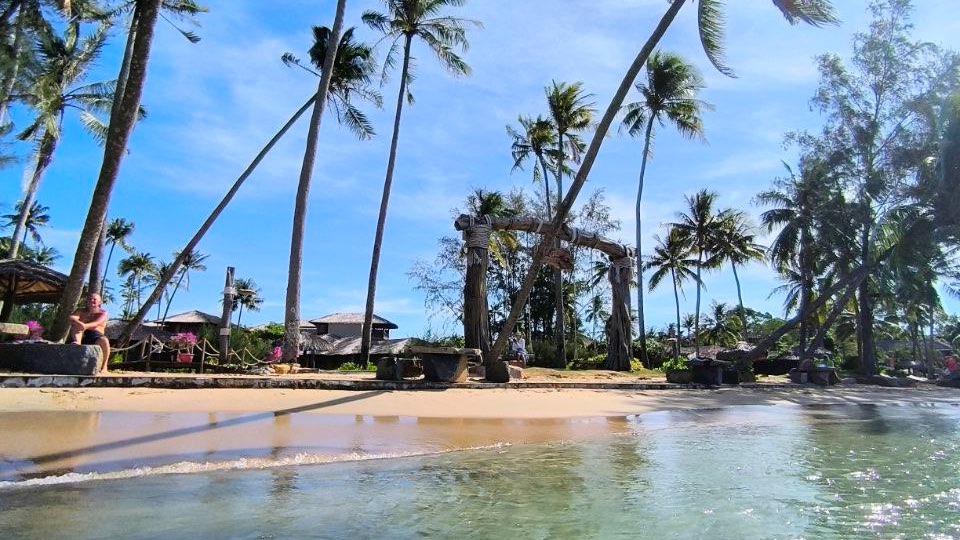
Choose a base around daily travel
| Area | Best practical use | What to expect |
|---|---|---|
| Duong Dong and Long Beach | First-time stays and central access | Night Market, pharmacies, ATMs, hotels along Tran Hung Dao / Bai Truong |
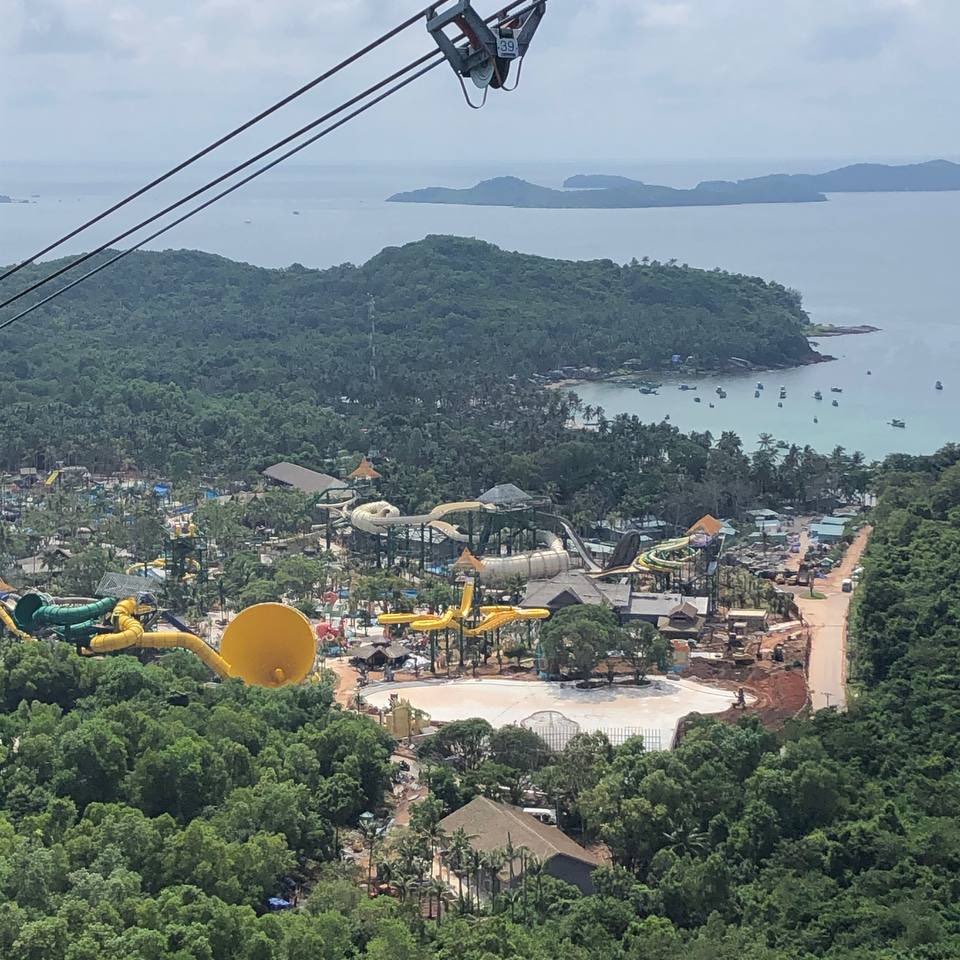
| An Thoi and the south | Island-hopping and Hon Thom | Boat departures, Bai Sao access, 7.9 km Hon Thom cable car |
| Ganh Dau and the north | Resorts, safari parks, national-park edges | Longer returns after dark; book rides early |
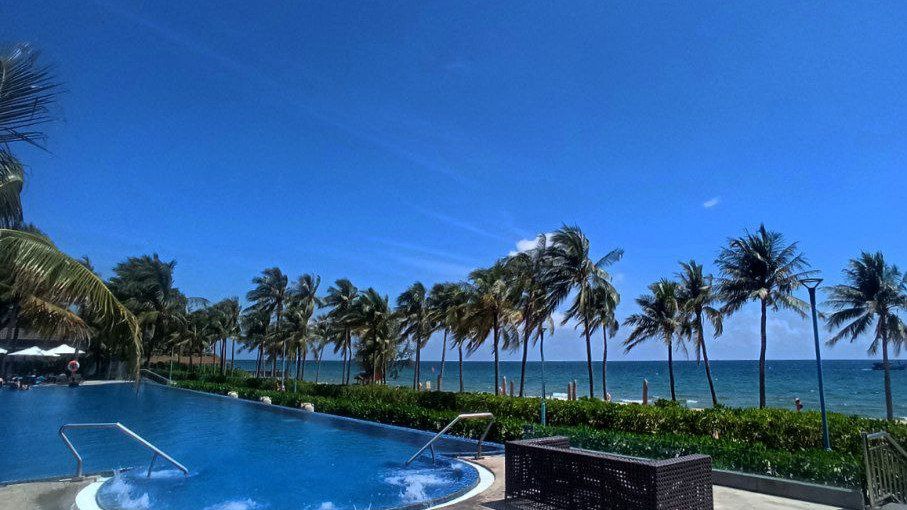
Duong Dong is dense: guest houses from roughly $15, mid-range beach strips, King Kong Mart, and easy Night Market access near Dinh Cau. An Thoi (about 20 km south of the airport) is the launch pad for An Thoi archipelago boat tours and the Hon Thom cable car. Bai Sao on the southeast has calm dry-season water; May–October winds push more debris onto open public stretches even when resort fronts are cleaned daily.
Compare stays in the hotel catalog and the neighbourhoods guide before locking transfers.
Ferries and seasonal beaches
Sea arrivals dock at Bai Vong, roughly 15 km east of Duong Dong. Superdong and Phu Quoc Express run from Ha Tien (~90 minutes) and Rach Gia (~2.5 hours). Match ferry timings with flight banks before you fix the hotel.
November–April is the dry season on the Gulf of Thailand side: daytime averages near 31°C and calmer west-coast water. May–October brings stronger southwest monsoon rain and wind on the west; eastern beaches including Bai Sao are more sheltered then.
Cash, cards and data
Cash still runs night-market stalls and most local food. Resort cards often add about 2.5% surcharge. VNPAY QR is everywhere for locals; most foreign banking apps cannot pay it. Get a Viettel or Vinaphone SIM/eSIM on arrival — coverage is solid across most of the island, including the national-park road. Pre-arrange a Vietnam eSIM if you need data before landing.
For same-day taxi maths and curb pitfalls at PQC, read Phu Quoc taxi fares. Broader first-week planning sits in the trip planning guide and island guides hub.